
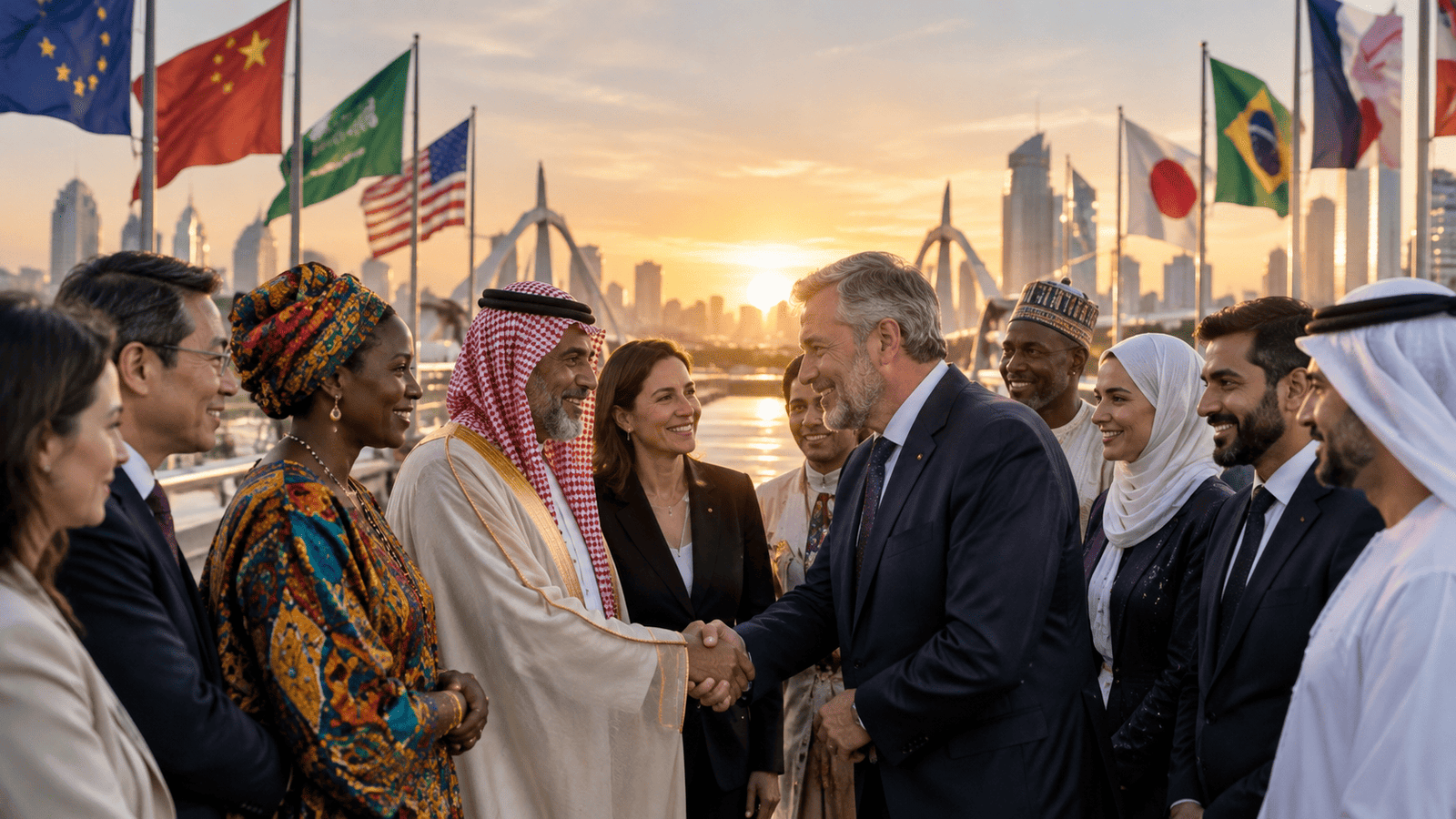
In a world shaped by political tensions, cultural differences, and competing interests, dialogue remains one of humanity’s most powerful tools for peace. Conflict may divide societies, but meaningful conversation can build bridges, restore trust, and create opportunities for cooperation.
From international diplomacy to community discussions, the ability to listen, understand differences, and negotiate peacefully is essential to building a more stable world. When dialogue triumphs over conflict, differences do not disappear—they become opportunities for understanding and cooperation.
Quick Facts
- Dialogue can prevent escalation by creating channels for communication before disagreements become violent.
- Diplomacy depends on dialogue, allowing countries to negotiate interests, address disputes, and pursue common goals.
- Peaceful communication builds trust among communities, institutions, and nations.
- Cultural exchange can reduce prejudice by replacing stereotypes with personal understanding.
- Cooperation is easier when people identify shared interests, even when their political or cultural views differ.
Why Dialogue Matters in a Divided World
Disagreements are inevitable. Countries compete for resources and influence; communities may have conflicting priorities; individuals can hold fundamentally different political, religious, or cultural perspectives.
The critical question is not whether differences exist, but how societies respond to them.
Conflict driven by hostility, misinformation, or fear can deepen divisions. Dialogue offers another path. It creates space for people to explain their concerns, challenge assumptions, and search for practical solutions.
Effective dialogue does not require everyone to agree. Instead, it requires participants to recognize one another’s concerns and search for areas of common ground.
Dialogue Versus Conflict : Two Paths Forward
| Dialogue | Conflict |
|---|---|
| Encourages listening and understanding | Often reinforces fear and mistrust |
| Seeks negotiated solutions | Can produce winners and losers without resolving underlying issues |
| Builds long-term relationships | Can deepen divisions |
| Allows grievances to be addressed peacefully | May escalate tensions |
| Creates opportunities for cooperation | Can make future cooperation more difficult |
This does not mean that dialogue automatically resolves every dispute. Some conflicts involve deep historical grievances, unequal power, or competing interests that cannot be settled quickly. Nevertheless, communication is often the starting point for finding peaceful solutions.
The Main Causes of Conflict
Understanding why conflict emerges is essential to preventing it. While every situation is different, several recurring factors can contribute to confrontation:
- Political and economic competition — Rival interests over power, territory, resources, or economic opportunities can generate tension.
- Misinformation and propaganda — False or misleading information can intensify fear and hostility.
- Historical grievances — Unresolved injustices and memories of past violence can influence present relationships.
- Social and cultural divisions — Stereotypes and discrimination can make communities distrust one another.
- Poor communication — Misunderstandings can turn manageable disagreements into serious disputes.
- Lack of trust — When parties assume the worst about one another, even constructive proposals may be viewed with suspicion.
Addressing these underlying factors requires more than temporary agreements. It requires sustained communication, credible institutions, responsible leadership, and public participation.
How Dialogue Can Transform Conflict
1. Listening Before Responding
Real dialogue begins with listening. Understanding another perspective does not mean accepting it. It means making a genuine effort to understand why people think and feel differently.
2. Finding Common Ground
Even deeply divided groups often share basic interests: security, economic opportunity, dignity, education, health, and a better future for their children. Identifying these shared priorities can create a foundation for cooperation.
3. Rebuilding Trust
Trust rarely returns overnight. It develops through consistent actions, transparency, reliable communication, and respect for agreements.
4. Replacing Dehumanization With Human Connection
Personal encounters can challenge stereotypes that flourish when groups remain isolated from one another. Cultural exchange, education, journalism, and people-to-people diplomacy can help communities see opponents as human beings rather than abstract enemies.
5. Creating Space for Peaceful Negotiation
Governments, civil society organizations, community leaders, educators, and international institutions can all contribute to dialogue. Maintaining communication channels can be particularly important during periods of heightened tension.
The Role of Journalism and Responsible Information
A peaceful society also depends on credible information.
Journalists have a responsibility to verify facts, distinguish reporting from opinion, provide context, and avoid language that unnecessarily inflames tensions. Audiences, in turn, should evaluate sources carefully and be cautious about sharing unverified claims.
Responsible journalism can help people understand complex conflicts without reducing them to simplistic narratives. It can also give visibility to peaceful initiatives and voices that might otherwise be overlooked.
In the digital age, this responsibility is even more important. Misinformation can travel across borders within minutes, while correcting a false claim often takes considerably longer.
Key Findings
The evidence from diplomacy, peacebuilding, and conflict-resolution practice points to several important lessons :
- Communication does not eliminate disagreement, but it can make disagreement manageable.
- Peace requires more than the absence of violence; it also requires trust, justice, inclusion, and functioning institutions.
- Shared interests can provide a starting point for cooperation between divided groups.
- Early dialogue can help prevent disputes from escalating.
- Young people and local communities have an important role in building cultures of peace.
- Accurate information and responsible journalism are essential to informed public dialogue.
Main Results of Choosing Dialogue
When dialogue is sustained and supported by meaningful action, its potential results include :
- Reduced tensions
- Greater mutual understanding
- Stronger diplomatic relationships
- More effective conflict prevention
- Increased cooperation across cultural and political boundaries
- Greater public trust
- More durable peace agreements
However, dialogue must be genuine. Conversations that exclude affected communities, ignore legitimate grievances, or serve only as public relations exercises are unlikely to produce lasting results.
A Shared Future Begins With Conversation
The world is not united because everyone thinks alike. It is united by the human capacity to communicate, cooperate, and seek peaceful solutions despite differences.
Diplomacy may take place between governments, but dialogue happens everywhere: in classrooms, workplaces, neighborhoods, families, community organizations, and international forums. Each constructive conversation can challenge the assumption that disagreement must lead to hostility.
The strongest societies are not those without differences. They are those with the institutions, values, and courage to manage differences peacefully.
Conclusion
Dialogue is not a sign of weakness. It is a practical instrument of peace. It gives people the opportunity to replace assumptions with understanding, hostility with communication, and confrontation with negotiation.
The path toward global cooperation will never be simple. Political interests will continue to clash, historical grievances will persist, and new challenges will emerge. Yet humanity has repeatedly demonstrated that cooperation is possible when people choose communication over isolation and negotiation over escalation.
The world unites us when dialogue triumphs over conflict—not by erasing our differences, but by teaching us how to live, work, and build a future together despite them.
Leave a Reply