
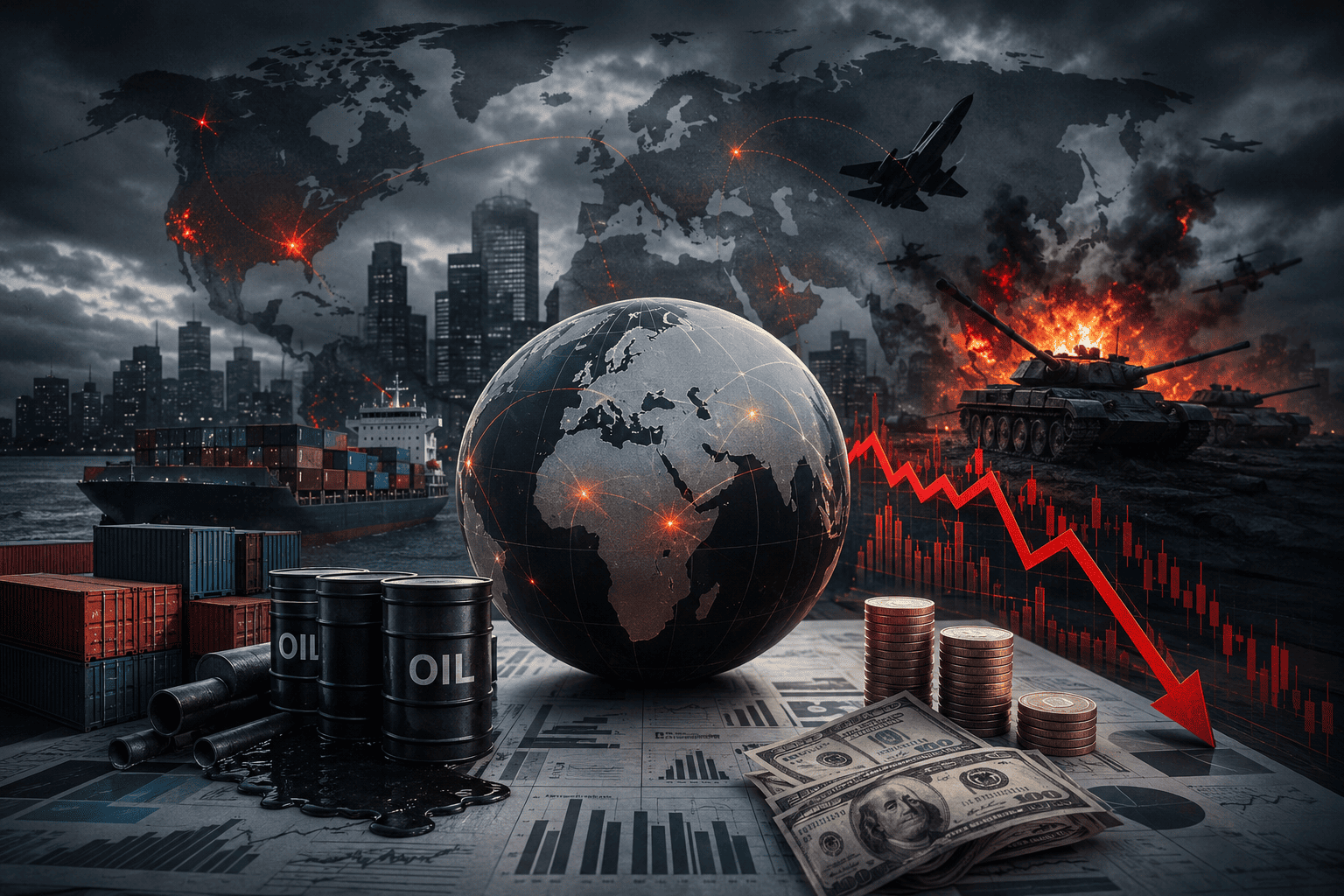
International tensions have become one of the most influential forces shaping the modern economy. From geopolitical rivalries and regional conflicts to trade disputes and economic sanctions, these developments have disrupted global markets, altered investment patterns, and challenged long-established supply chains. As economies become increasingly interconnected, the consequences of political instability extend far beyond national borders.
This article examines the economic impact of rising international tensions, the primary factors driving uncertainty, and the potential implications for businesses, governments, and consumers worldwide.
Quick Facts
- Global trade is highly vulnerable to geopolitical instability and trade restrictions.
- Energy and commodity prices often rise during periods of international conflict.
- Supply chain disruptions increase production costs and delay manufacturing.
- Financial markets typically experience higher volatility during geopolitical crises.
- Central banks may face greater challenges in balancing inflation and economic growth.
Key Research Findings
Recent economic analyses consistently show that:
- Geopolitical uncertainty reduces global investment as businesses postpone expansion plans.
- International conflicts increase inflationary pressures, particularly through higher energy and transportation costs.
- Diversification of supply chains has become a strategic priority for multinational companies.
- Emerging markets are often more vulnerable to capital outflows during periods of global uncertainty.
- International cooperation remains essential to maintaining long-term economic stability.
Understanding Rising International Tensions
International tensions arise from multiple sources, including:
- Geopolitical rivalries
- Military conflicts
- Trade disputes
- Economic sanctions
- Cybersecurity threats
- Competition over strategic resources
While these issues differ in nature, they frequently produce similar economic consequences by reducing confidence and increasing uncertainty.
How International Tensions Affect the Global Economy
1. Disruption of Global Supply Chains
Global manufacturing depends on efficient international logistics. Political instability can interrupt shipping routes, restrict exports, or delay access to critical raw materials.
Key impacts include:
- Higher transportation costs
- Production delays
- Inventory shortages
- Increased manufacturing expenses
Many companies are now shifting toward regional production and supplier diversification to reduce dependence on a single country.
2. Rising Inflation
International conflicts often lead to higher prices for:
- Oil
- Natural gas
- Food commodities
- Industrial metals
These increases raise production costs, which are eventually passed on to consumers through higher prices.
3. Increased Financial Market Volatility
Investors generally react quickly to geopolitical uncertainty.
Common market reactions include:
- Declining stock prices
- Increased demand for safe-haven assets
- Currency fluctuations
- Reduced foreign direct investment
Financial institutions typically become more cautious until political conditions stabilize.
4. Trade Restrictions and Economic Sanctions
Governments frequently impose trade restrictions or sanctions during periods of international conflict.
These measures can result in:
- Reduced international trade
- Limited market access
- Higher import costs
- Slower economic growth
Businesses operating across multiple regions often face additional compliance costs and operational complexity.
Impact on Major Economic Sectors
| Sector | Primary Impact | Long-Term Outlook |
|---|---|---|
| Energy | Higher prices and supply uncertainty | Continued volatility |
| Manufacturing | Supply shortages and rising costs | Increased regional production |
| Technology | Export controls and semiconductor restrictions | Greater domestic investment |
| Agriculture | Fertilizer and food supply disruptions | Price fluctuations |
| Finance | Market uncertainty and investment risk | Higher demand for risk management |
Effects on Businesses
Companies worldwide are adapting by implementing new strategies, including:
- Diversifying suppliers
- Increasing inventory resilience
- Investing in digital supply chain management
- Expanding regional manufacturing
- Strengthening cybersecurity measures
These initiatives help organizations reduce exposure to geopolitical risks while improving operational resilience.
Consequences for Consumers
Consumers often experience the effects indirectly through:
- Higher food prices
- Increased fuel costs
- More expensive imported goods
- Rising interest rates
- Greater economic uncertainty
Household budgets may come under pressure as inflation outpaces income growth.
The Role of Governments
Governments can reduce economic risks through:
- Strengthening diplomatic engagement
- Supporting diversified trade partnerships
- Investing in strategic industries
- Enhancing energy security
- Promoting financial stability
International cooperation remains critical for maintaining resilient global markets.
Main Causes Behind the Economic Impact
The most significant drivers include:
- Geopolitical conflicts
- Trade barriers
- Economic sanctions
- Supply chain disruptions
- Energy market instability
- Investor uncertainty
- Inflationary pressures
Together, these factors create a cycle of reduced investment, slower growth, and heightened market volatility.
Future Outlook
Although international tensions are likely to remain a defining feature of the global landscape, businesses and governments are becoming more resilient. Investments in diversified supply chains, digital infrastructure, renewable energy, and regional cooperation may help reduce future economic vulnerabilities.
However, prolonged geopolitical instability could continue to limit global growth and increase uncertainty for both developed and emerging economies.
Conclusion
Escalating international tensions have become a major driver of economic uncertainty worldwide. Their effects extend across trade, investment, energy markets, financial systems, and consumer prices. While governments and businesses are adopting strategies to strengthen resilience, sustainable economic stability ultimately depends on international cooperation, diversified supply chains, prudent policymaking, and effective risk management. Organizations that proactively adapt to geopolitical change will be better positioned to navigate future disruptions while maintaining long-term growth and competitiveness.
Leave a Reply