
 Bbihi L.
Introduction
A balanced diet supplies the body with the right amounts of macronutrients (proteins, carbohydrates, healthy fats) and micronutrients (vitamins and minerals), plus sufficient fiber and fluids to support daily energy needs, growth, repair, and long-term health. Health authorities worldwide recommend eating a variety of nutrient-dense whole foods while limiting processed foods, added sugars, and excess salt and saturated fat. These general principles are supported by organizations such as the World Health Organization (WHO) and national health services. Organisation mondiale de la santé+1
Why a Balanced Diet Matters
- Balanced nutrition supports optimal energy, immune function, brain health, and metabolic regulation. PMC
- Eating a pattern of whole foods (vegetables, fruits, whole grains, legumes, lean proteins, and healthy fats) lowers the risk of chronic diseases such as heart disease, type 2 diabetes, some cancers, and cognitive decline. PMC+1
- Public guidance commonly recommends at least 400 g of fruits and vegetables per day and a shift from saturated/trans fats to unsaturated fats (e.g., olive oil, fatty fish). Organisation mondiale de la santé+1

The Science Behind “Balanced”: Macronutrients and Micronutrients
A truly balanced diet is more than “calories in vs calories out.” It’s the right types of calories and nutrients:
Proteins — needed for tissue repair, immune molecules, enzymes, and muscle. High-quality sources include lean meats, fish, eggs, dairy, legumes, and soy.
Carbohydrates — primary fuel for the brain and working muscles; prioritize complex carbohydrates (whole grains, starchy vegetables, legumes) and minimize refined sugars.
Healthy fats — essential for hormone signaling, brain function, and absorption of fat-soluble vitamins. Unsaturated fats from olive oil, avocados, nuts, seeds, and fatty fish are preferred. NCBI+1
Table — Core Nutrients, Functions, and Food Sources
| Nutrient | Main Functions | Good Food Sources |
|---|---|---|
| Protein | Build & repair tissues, enzymes, antibodies | Fish, poultry, eggs, legumes, tofu |
| Complex carbs | Sustained energy, fiber | Whole grains, beans, vegetables |
| Healthy fats | Cell membranes, hormone production, vitamin absorption | Olive oil, fatty fish, nuts, seeds |
| Vitamins & minerals | Metabolic regulation, immunity, bone health | Fruits, vegetables, dairy, fortified grains |
| Fiber | Gut health, satiety, cholesterol control | Whole grains, legumes, fruits, vegetables |
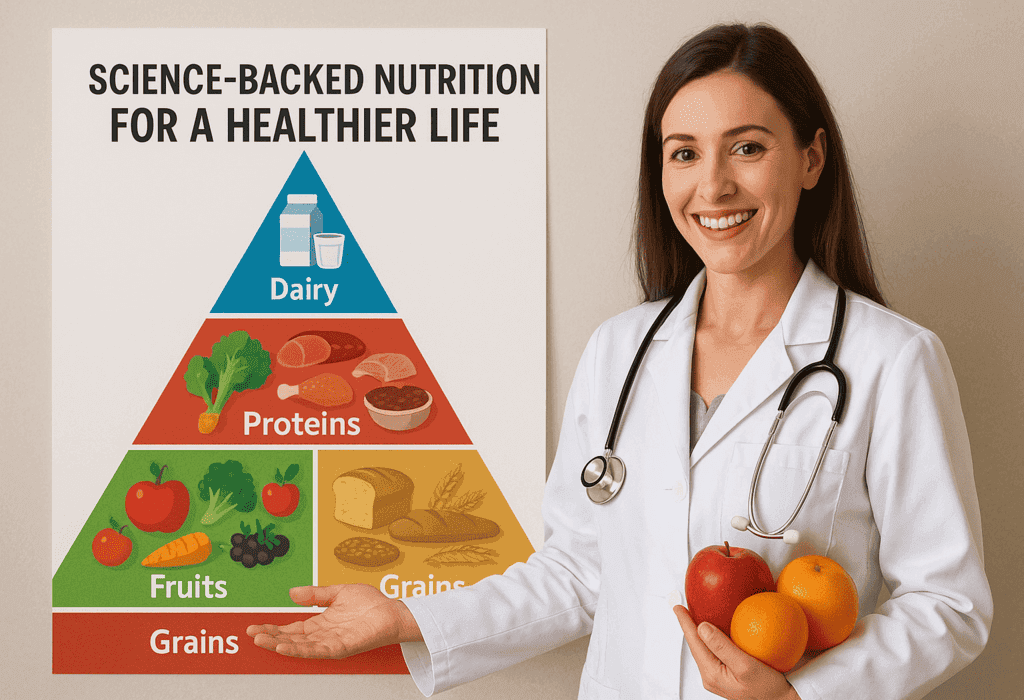
Dietary Patterns That Work — What the Evidence Says
Large bodies of research point to dietary patterns (not individual nutrients) as drivers of long-term health. Two well-supported examples:
- Mediterranean-style eating patterns — rich in plant foods, olive oil, moderate fish and poultry, and low in processed foods — are consistently associated with lower cardiovascular risk, improved metabolic markers, and better aging outcomes in cohorts and meta-analyses. Recent reviews and meta-analyses reinforce benefits for longevity and reduced cardiometabolic disease. PMC+1
- Whole-food-based patterns (high in fruits, vegetables, legumes, whole grains, and lean proteins) reduce risk of diabetes and cardiovascular disease; conversely, diets high in ultra-processed foods and processed meats increase long-term health risks. JAMA Network+1
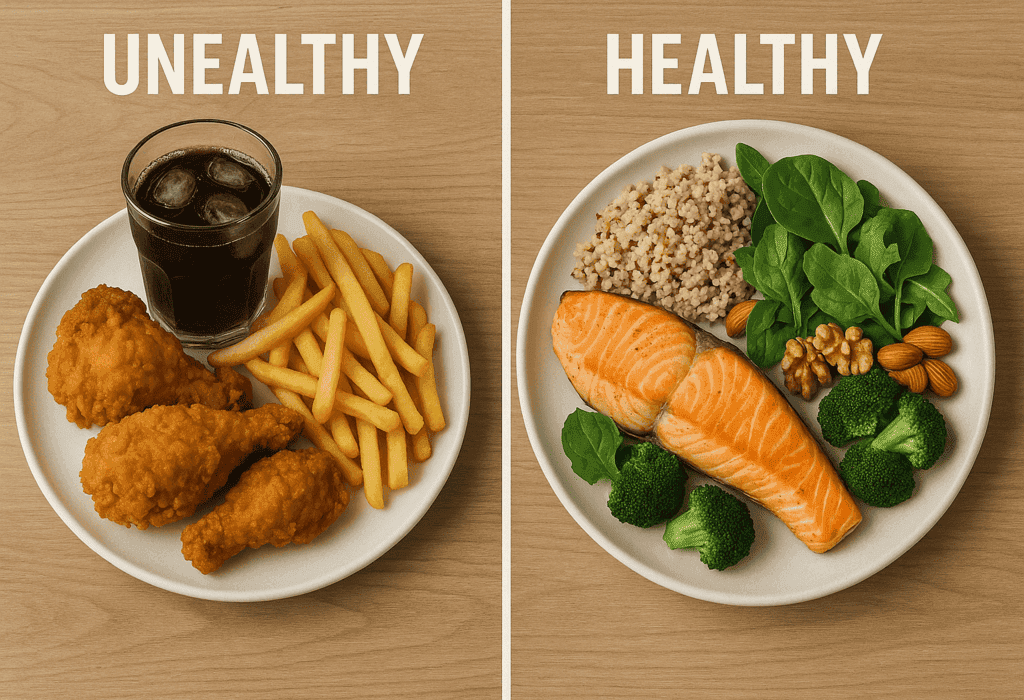
A balanced diet and brain health
Nutrition affects cognitive function across the lifespan. Regular consumption of fish and omega-3 fatty acids (DHA/EPA) is associated with better cognitive performance and lower risk of cognitive decline in many observational studies; systematic reviews suggest a dose-response relationship but call for more randomized trials to confirm causality. The broader Mediterranean/whole-food pattern also appears protective against dementia and cognitive decline. PMC+1
Notable finding: A large prospective analysis showed that replacing margarine/mayonnaise with olive oil (a core Mediterranean fat) correlated with a lower risk of dementia-related mortality, indicating the importance of fat quality for brain health. JAMA Network
Heart Health and Metabolic Benefits
A balanced diet that emphasizes unsaturated fats, fish, whole grains, and plant foods reduces cardiovascular risk factors (lower LDL, improved HDL, better blood pressure) and is associated with lower rates of heart disease in many population studies. Meta-analyses of Mediterranean diet interventions show consistent reductions in cardiovascular events. WHO recommendations to limit saturated and trans fats are grounded in extensive evidence linking these fats to higher cardiovascular risk. Organisation mondiale de la santé+1
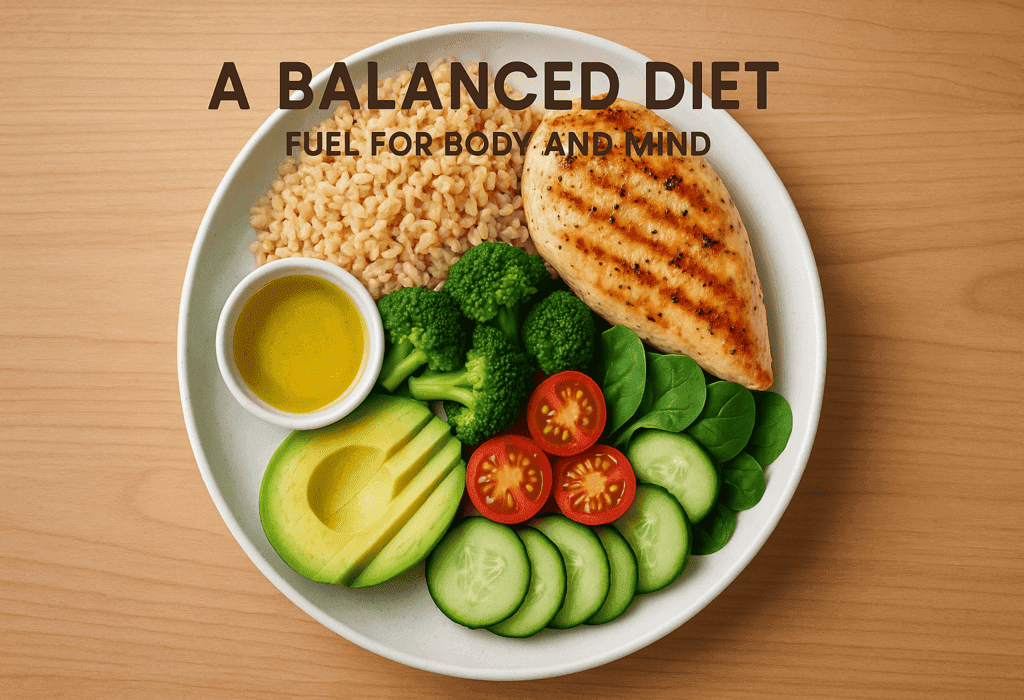
Practical Steps — How to Build a Balanced Plate (Actionable Tips)
- Fill half your plate with vegetables and fruit (aim for variety and seasonal produce). Organisation mondiale de la santé
- One quarter with lean protein — fish twice weekly, poultry, legumes, or tofu. (Fatty fish supply important omega-3s.) PMC
- One quarter with whole grains or starchy vegetables — brown rice, quinoa, sweet potato.
- Add a small amount of healthy fat — olive oil dressing, a handful of nuts, or avocado. JAMA Network
- Limit ultra-processed foods, sugary drinks, and foods high in salt or saturated fat. JAMA Network
- Breakfast: Oat porridge with berries, a spoonful of nuts, and low-fat milk or yogurt.
- Lunch: Grilled salmon over mixed greens, quinoa, olive oil-lemon dressing.
- Snack: Apple + a small handful of almonds.
- Dinner: Stir-fry tofu with vegetables and brown rice; side salad.
Special Populations and Considerations
- Pregnancy & lactation: Focus on nutrient-dense foods (iron, folate, calcium, DHA). Choose low-mercury fish (e.g., salmon, sardines) and follow local guidelines on fish intake. Organisation mondiale de la santé
- Older adults: Adequate protein and micronutrients reduce sarcopenia risk; Mediterranean and whole-food patterns support cognitive and physical resilience. PMC
- People with diabetes or cardiometabolic disease: Emphasize whole grains, legumes, healthy fats, non-starchy vegetables; individualized portion control and professional guidance are important. MDPI
Monitoring, Planning, and Behavior Change
Adopting a balanced diet is easier with small, sustainable steps: meal planning, batch cooking, swapping processed snacks for fruit/nuts, and gradually replacing saturated fats with unsaturated options (olive oil, oily fish). Work with a registered dietitian or physician for personalized plans and medical conditions.
Conclusion
A balanced diet—centered on whole, minimally processed foods, varied plant foods, lean proteins (including fish), healthy fats (like olive oil), and adequate fiber—supports brain function, cardiovascular health, immunity, and healthy aging. International guidelines and a growing body of research, including large cohort studies and systematic reviews, reinforce that the pattern of eating matters more than any single nutrient. Practical changes (fill half your plate with plants, prioritize fish and whole grains, choose healthy fats, and limit processed foods) will move anyone closer to better long-term health.
Selected Recent Studies & References
- World Health Organization — Healthy diet (fact sheet). WHO. Organisation mondiale de la santé
- Cena H, Calder PC. Defining a Healthy Diet: Evidence for the Role of Dietary Patterns. Nutrients. 2020; review on dietary patterns and public health. PMC
- Hareer LW, et al. The effectiveness of the Mediterranean Diet for primary and … (2024). Systematic review highlighting cardiovascular and aging benefits. PMC
- Godos J, et al. Fish consumption, cognitive impairment and dementia. Aging Clin Exp Res. 2024 — dose-response evidence for fish and cognitive outcomes. PMC
- Wei BZ, et al. The Relationship of Omega-3 Fatty Acids with Dementia … (2023) — systematic review on omega-3 and cognitive risk. PMC
- Tessier AJ, et al. Consumption of Olive Oil and Diet Quality and Risk of Dementia-Related Death. JAMA Network Open. 2024 — olive oil intake and dementia mortality analysis. JAMA Network
- Ma Y, et al. Dietary Macronutrient Intake and Cardiovascular Disease. Nutrients. 2024 — large cohort analyses of macronutrients and outcomes. MDPI
- NHS — Eating a balanced diet (public guidance). nhs.uk
- World Health Organization — Fruit and Vegetable intake recommendations (ELENA). Organisation mondiale de la santé
- Harvard T.H. Chan School of Public Health — Nutrition Source: Mediterranean Diet (background & guidance). The Nutrition Source+1